
On July 20, 2026, Coca-Cola announced a global packaging refresh. If you glanced at the headlines, you might expect a new logo, a bold redesign, maybe a splashy campaign. That’s not what happened.
Instead, Coca-Cola made one thing easier: telling its products apart.
Coke Zero Sugar now carries a darker, more prominent Dynamic Ribbon, larger “Zero Sugar” lettering, and (the detail doing most of the work) a black cap on plastic bottles. The goal, according to the company, wasn’t reinvention. It was consistency. As Global Category President Arnab Roy put it, the brief was to “make Coca-Cola more Coca-Cola, everywhere,” rolling out the same clearer visual system across more than 200 markets. (As of this writing, no North American launch date has been announced.)
It’s a small change on paper, but it’s a useful example of something every brand running more than one product on a shelf eventually has to solve: how do you stay recognizably *you* while still making sure customers grab the *right one*?
The real lesson isn’t design. It’s iteration.
It’s tempting to read the Coca-Cola story as a branding case study. We’d argue it’s really a packaging operations story. Coca-Cola didn’t tear up its can and start over, it identified one detail that wasn’t working hard enough, changed it, and rolled it out at a scale most brands will never touch.
That’s the part worth paying attention to if you’re not Coca-Cola. Most brands don’t get to treat a packaging update as a once-a-decade event. In practice, packaging changes are constant, and they tend to fall into a handful of familiar buckets:
– SKU changes — a new size, format, or variant added to an existing line
– Copy changes driven by regulation — labeling requirements shift more often than people expect. California, Virginia, and Connecticut all enacted new packaging-related laws effective July 1, 2026 alone, covering date labeling, foam bans, and PFAS disclosure
– New art — a refreshed look for an existing product, without changing the product itself
– New product launches — packaging built from scratch for something that didn’t exist before
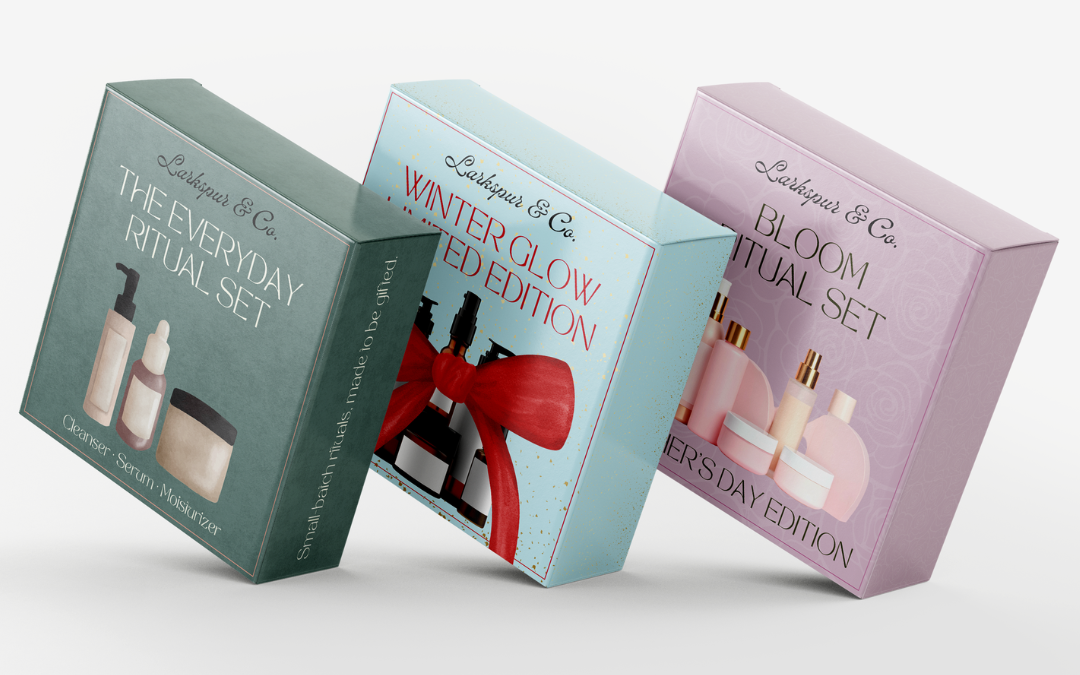
– Seasonal changes — limited runs, holiday editions, or timed promotions
None of these are rare events. For most growing brands, at least one of them is happening at any given time. The question isn’t whether your packaging will need to change, it’s whether your production process can keep up when it does.
Why speed and scale don’t have to be a trade-off
This is usually where brands hit friction. A quick, small-batch iteration and a full-scale production run have historically required different processes, different lead times, and often different vendors entirely, which means every “small” packaging change turns into a bigger decision than it should be.
That’s the problem digital and traditional production working together is built to solve. A SKU update or a seasonal test run can move through digital production quickly, without committing to a large print run before you know it’ll work. Once it’s ready to go wide, that same design scales into a traditional run without starting over, re-tooling from scratch, or switching partners mid-process.
In other words: the same instinct behind Coca-Cola’s cap change, a fast, targeted, well-executed detail, is available to brands at any size, as long as the production behind it can move at the speed the change actually requires.
The takeaway
Coca-Cola’s refresh is a reminder that differentiation doesn’t always require reinvention. Sometimes it’s one detail, a color, a cap, a panel, done deliberately and rolled out well. The bigger opportunity for most brands isn’t copying Coca-Cola’s design choice. It’s building a packaging process that can respond that quickly, whether the trigger is a new SKU, a new regulation, a new season, or a new product altogether.
Have a packaging change on the horizon, like a SKU update, a regulatory deadline, a seasonal launch? Let’s talk about how to move on it without slowing down your production timeline.
www.napcousa.com/quote-request